Outboard Driveshaft Length: How to Measure It and Avoid “Wrong Shaft” Confusion
June 5, 2026
Learn About Engine Size (Displacement) in Outboard Motors
June 23, 2026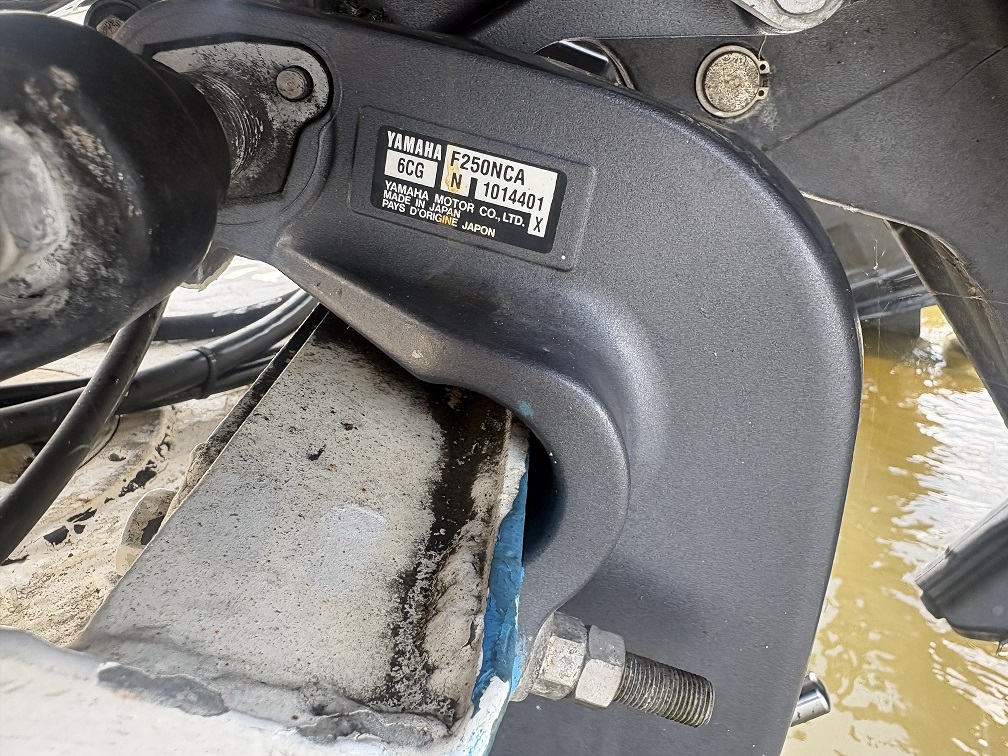
Yamaha F250NCA: Identify and Source the Correct Lower Unit
Executive Summary: The Yamaha F250NCA is a 250 HP, 4.2 L V6 “Offshore” outboard (digitally controlled) that ships without a lower unit. This means dealers must fit the appropriate gearcase later. The F250NCA (engine prefix 6CG) is essentially equivalent to a U.S. model F250XCA/UCA (Offshore series). Because NCA units come with no gearcase installed, you must confirm shaft length, gear ratio, rotation and part number before ordering a lower unit. In practice, F250 models use 25″ (X) or 30″ (U) shafts and a 1.75:1 gear ratio. To source the right unit, collect the engine’s full model/serial tag and the lower-unit ID tag (shown on the gearcase), then match specs to a catalog. This article explains what “F250NCA” means, how it differs from other F250 variants, what specs to gather (shaft, gear ratio, rotation), and how to read ID tags. We also list recommended parts sources (Yamaha OEM and major dealers) and options (OEM vs reman vs aftermarket), and provide a step-by-step ordering checklist (with flowchart) plus a sample customer email.
What Does “F250NCA” Mean?
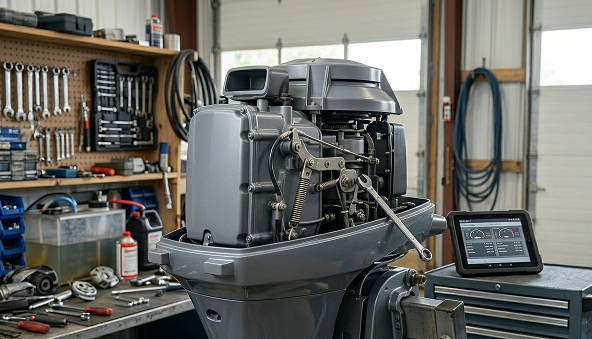
Yamaha F250 250 HP 4.2 L V6 outboard engine. The NCA model (digital control) is part of Yamaha’s Offshore series, shipped without the lower gearcase.
- NCA = No Carrier/Attachment: The suffix NCA is a factory code indicating this engine is shipped without the gearcase assembly (lower unit). As Yamaha technical dealers explain, “F250NCA motor models are shipped to dealers without lower units so that the dealer can install the appropriate shaft length lower unit for the application”. In other words, it’s a “crate motor” engine that must receive a gearcase later.
- 4.2 L Offshore Series: The F250NCA is a 4.2 L, 60° V6 engine, part of Yamaha’s high-output Offshore family introduced in 2008–2010. These models (including F225, F250, F300) have digital electronic controls, dual EFI, integrated electric steering and low-oil shutdown. For example, Yamaha’s spec sheet notes the 4.2 L F250 (digital) “features a fresh new cowling design… with integrated digital electric steering”. In short, the NCA is not an old 3.3 L (6-cylinder) F250 – it’s the modern V6 F250.
- Engine/Serial Prefix (6CG): A quick way to tell this is a V6 F250 is the engine serial prefix. Yamaha uses 6CG for the 4.2 L F250 series (introduced 2010+). For instance, the F250UCA/XCA/NCA models all show prefix “6CG” in 2018 serial number data. (By contrast, older 3.3 L F250s had a 3-pattern prefix).
In summary, F250NCA = 250 HP, 4.2 L V6, digitally-controlled (Offshore model), shipped with no lower unit. It is essentially the same as an F250XCA/UCA except missing the gearcase. Dealers therefore must specify the correct lower unit (shaft length, rotation) when rigging the boat.
Differences vs Other F250 Variants
Yamaha’s F250 line has included different engines over the years. Key differences:
- Engine Size (4.2 L vs 3.3 L): From 2007–2013, Yamaha sold a 3.3 L 6-cylinder F250 (often F250C/A/B, etc). Starting 2010, Yamaha introduced the 4.2 L V6 Offshore F250 (digital models like F250XA/XCA/UCA, etc). The NCA code belongs to the latter group (4.2 L). These V6 models have DOHC, 24-valve heads, and advanced features (EFI, electric steering). The older 3.3 L units are mechanically simpler and use different gearcases.
- Control System: The Offshore V6 F250 (which includes NCA) uses Yamaha Digital Electronic Control (DEC) drive-by-wire for throttle/shift, and often integrates Helm Master EX joystick control. Earlier F250s (3.3 L or mechanical-shift) did not have DEC.
- Suffix Letters: Other F250 models have suffixes that describe shaft length and other options. The letter after “250” indicates shaft length: X = 25″ shaft, U = 30″ shaft. (For example, F250XCA has 25″, F250UCA has 30″). The “NCA” prefix essentially inherits this: if an engine is “F250NCA”, the chosen shaft length (25 or 30 inches) is determined later; dealers often categorize by XCA or UCA accordingly. The SimYamaha catalog explicitly notes “X = 25″ or U = 30″” for these models.
- Rotation and Versions: Yamaha offers right-hand (standard) and counter-rotation (“L” prefix) versions for multi-engine rigs. For example, a left-rotation F250 might be denoted LF250 (or F250LSA etc). The NCA code simply means “no case”; rotation would be chosen when ordering.
- Prefix Comparison: As noted, serials 6CG indicate a 4.2 L offshore F250. By contrast, older models used e.g. 6CL/6CM for F225 or 3VM for 3.3 L F250. This helps confirm your engine’s family.
Key point: F250NCA is not the same as, say, a 2007 3.3 L F250. If in doubt, check the model tag or serial prefix: 6CG× is 4.2 L (Offshore). Also note, Yamaha released a “NCA2” code around 2020 (likely updates to that series).
Why Confirm the Lower Unit for Each Engine
Because the NCA engine comes with no lower unit, it is not a generic part – each lower unit is model-specific. Differences include:
- Shaft Length (Transom Height): Boats are built for a certain transom height. Yamaha F250s come in 25″ (X) or 30″ (U) shafts, and some digital models (DEC) also have a 35″ option. You must know which length (X or U) the boat needs. Installing the wrong length causes serious issues (shaft too short/long, drag, etc). The dealer typically knows from boat specs, but if you’re sourcing a lower unit, ask your customer for the shaft length (often stamped or noted on engine paperwork).
- Rotation (RH or LH): Most single-engine boats use standard right-hand (clockwise) rotation. Twin or triple setups need one left-hand rotation unit. This is a separate unit. Make sure you confirm which is needed.
- Gear Ratio: Although many F250s use the same gear ratio, confirm it. Yamaha lists 1.75:1 as the standard gearcase ratio for the 4.2 L F250. However, if a rig had a different prop (some very large props on long shafts), a different ratio might be used. The gear ratio is usually stamped on the lower unit data plate (example: “90-421” might be a 2.0:1 gearcase, while a 1.75:1 could be 90-422). Always read the plate or mark to be sure.
- Part Number / Casting: Each lower unit assembly has a Yamaha part number (or casting code) and perhaps an assembly number. This must match the engine model. For example, the 30″ RH lower unit for a 4.2 L F250 is part 6CE-45301-00-8D. A 25″ version has a different code (e.g. 6CE-45300-…). Using the wrong one means parts (like the drive shaft, exhaust housing, etc.) won’t fit.
In short, you need all the specs before ordering a lower unit. A reputable guide lists exactly the four pieces of info required: the complete engine model, shaft length, rotation, and gearcase family (ratio). Without these, a parts dealer cannot guarantee compatibility.
Key Specifications: Gear Ratio, Shaft Length, Rotation, etc.
To summarize the typical specs for a 4.2 L F250 (NCA) model:
| Specification | Typical Value(s) | Notes |
|---|---|---|
| Engine | 4.2 L V6 (Yamaha Offshore) | Model code prefix 6CG (2010–2020); DEC drive-by-wire. |
| Shaft Length | 25″ or 30″ (X or U) | X = 25″, U = 30″; (digital F250 can also be 35″). Confirm with boat. |
| Gear Ratio | 1.75:1 | Standard for 4.2 L F250. (Counter-rotating props available, double-check if needed). |
| Rotation | Right-hand (clockwise) or Left-hand (anti, for twins) | Specify when ordering. |
| Lower Unit ID | Part no. or casting code | E.g. 6CE-45301-00-8D is a RH, 30″ lower unit for F250. |
| Year Range | 2014–2020 (NCA) | NCA2 code appeared in 2020; older F250 (2013 and earlier) have different models. |
In practice, gather this data (engine model, year, shaft length, rotation, gear ratio) and compare to parts catalogs. Yamaha’s official specs confirm 1.75:1 gear ratio and 25/30″ shaft lengths for the F250. The table above is a quick reference.
Finding and Reading the ID Tags
To verify a F250NCA (or any Yamaha outboard), locate the identification plates/tags:
- Engine Model Tag: On Yamaha outboards, the main ID tag is usually mounted on the transom bracket (port side). It shows the Model (e.g.
F250NCA) and Serial Number. Clean and photograph this plate. If it’s missing, some models have a secondary label inside the cowling, or the engine block may be stamped (as a backup). But the easiest is the transom bracket plate. - Lower Unit Tag: The gearcase (lower unit) also carries identifying marks. Often, there is a small rectangular plate on the port side of the lower unit (near the water-pickup intake or under the ram casting) listing the Gearcase Model and Part Number. On older units, it may be a stamped metal tag or lettering on the casting. Commonly it includes the part number (like 90-422 or 6CE-45301-00-8D) and the gear ratio. Make sure to get a clear photo of this plate.
- Propeller Markings: Sometimes the prop itself is stamped with the gear ratio (“MIG” etc), but the tag is more reliable.
- Examples: For a F250NCA, an ID tag might read “MODEL F250NCA YEAR 2016” etc, and a lower tag like “90-422 1.75:1” or similar.
By checking the engine tag, you confirm it is indeed an NCA model (and the suffix X/U). By checking the lower unit tag, you confirm its specifics (shaft, ratio). If tags disagree, rely on the engine tag and the actual measurements (e.g. measure shaft or see bolt spacing).
Photos to Request from the Customer
When dealing with a customer who needs a replacement lower unit, ask them to send specific photos of the engine and gearcase. This helps avoid mistakes. Exact shots to request:
- Engine ID Plate: A clear close-up of the model/serial tag on the transom bracket. This shows the model code (e.g. F250NCA, with prefix 6CG) and year.
- Engine/Brackets: A wider shot of the engine tilt bracket area, to see context (mounting bracket, tilt lock).
- Lower Unit Side (Gearcase): A photo of the entire lower unit from port (left) side, including the skeg and water intake housing. This helps identify the gearcase shape.
- Lower Unit Tag: A close-up of the data plate or stamping on the lower unit. This tag shows the part number (e.g. 90-422 or 6CE-45301-00-8D) and gear ratio.
- Driving Gear (if needed): If the tag is missing, remove the prop and photo the top drive gear — the part number may be on the drive shaft itself, but usually the plate is sufficient.
- Misc/Transom: If still unsure, photos of the serial number on the engine block (freeze plug) or cowling decals can help.
By requesting these exact shots, you get the model and lower-unit info needed to confirm specs. (A good reference on this process notes: “The #1 source [for model info] is the transom bracket ID plate”. Similarly, gearcase plates are essential for gear ratio.)
Checklist of Specs to Collect
When quoting or ordering, use this checklist to avoid missing anything:
- Complete Engine Model (e.g.
F250NCA, including any prefix likeLF250NCAfor counter-rotating). Check that Model tag on transom. - Engine Serial Number/Year. (Identifies production run; e.g. 2016, 2018, etc.)
- Shaft Length: Confirm inches. You can derive from model suffix (X=25″, U=30″) or measure from transom to prop mounting surface.
- Rotation: Is the prop right-hand (CW, standard) or left-hand (CCW)? Counter-rotating models have an “L” in the code (e.g.
LF250NCA). - Gear Ratio: Read it from the lower unit tag (e.g. 1.75:1, 2.08:1, etc) or note the gearcase model number.
- Lower Unit Part Number: If visible, record the exact part number stamped on the gearcase (if the customer has the old unit). Otherwise, note how it was labeled on the tag (like 90-422 or 6CE-45301-00-8D).
- Photos of ID Tags: Ensure clear images of both the engine’s model/serial tag and the lower unit’s tag.
- Boat/Transom Details: (Optional but helpful) Boat manufacturer and model, and transom height (shore power or charts).
Each of these is needed to match the right lower unit. A well-known parts guide emphasizes you need “complete engine model number, shaft length, rotation, and gearcase family” before ordering.
OEM vs Remanufactured vs Aftermarket Parts
When sourcing a lower unit, you have several categories:
- OEM (Genuine Yamaha): These are brand-new Yamaha assemblies. Example: Yamaha part 6CE-45301-00-8D is a complete RH lower unit (30″ shaft) for 4.2 L F250/F300. Yamaha’s dealers or official parts sites (like YamahaOnlineParts) carry these. Pros: Guaranteed fit and quality, full Yamaha warranty. Cons: High cost and sometimes limited availability (older NCA units may be discontinued; as seen, YamahaOnlineParts listed 6CE-45301-00-8D at ~$1,631 but marked unavailable).
- Remanufactured/Rebuilt: Many marine shops or Mercury Racing (RMC) offer remanufactured lower units. These are factory cores rebuilt with new gears/seals. Pros: Lower cost than new, often OEM-quality parts. Cons: Check warranty (typically 1–3 years), core charges, and ensure the correct spec (rebuilder must know the exact model). For example, Mercury RMC offers reman lower units for Yamaha V6 engines; you would ask for the F250 (76° V6) lower with desired length/rotation. (Cites are scarce for reman; mention anecdotally.)
- Aftermarket (Independently Made): Several companies build aftermarket gearcases that fit Yamaha outboards. These often come with a long warranty (3–5 years) and can be less expensive. For example, YMLowerunit advertises “Aftermarket” lower units: their SKU 90-422 model is a direct-fit replacement for the Yamaha F250 4-stroke (25″/30″ shaft, 1.75:1) at ~$1,399 (10% off sale price shown). Another product, SKU 90-423, covers F250–F350 (4.2L V6) for 25–30″ shafts. Pros: Cheaper than OEM, often high quality and long warranty. Cons: Not factory Yamaha, some risk of fitment quirks (though those brands guarantee fit).
- Used Salvage: Sometimes one can find a used lower unit from a junked engine (e.g. on eBay or salvage yards). This is cheapest but risky: unknown history, wear, and likely no warranty. Only use if fully tested and as a last resort.
A summarized comparison table:
| Option | Source | Example Part/Price | Warranty | Notes |
|---|---|---|---|---|
| OEM (New Yamaha) | Yamaha Dealer/Websites | 6CE-45301-00-8D (~$1,631) | 1–3 yrs (limited) | Direct-fit, top quality; often back-ordered or costly. |
| Remanufactured | Marine rebuilders, RMC | (quote varies) | ~1–3 yrs | Lower cost than new; rebuilt with OEM parts. |
| Aftermarket | Major dealers (Mariners, etc) | SE90-422 ($1,399) | 3–5 yrs | Direct-fit aftermarket; cheaper; longer warranty. |
| Used / Salvage | eBay, yards | Varies | None (as-is) | Very inexpensive; risk of wear/mismatch. |
All listed prices and parts are illustrative. For example, MarinersWarehouse Yamaha F250 Lower Unit SE90-422 (25″/30″, 1.75:1) is shown at $1,399. In contrast, Yamaha’s own 30″ assembly (6CE-45301-00-8D) was $1,631. (Keep in mind dealers may charge labor, core deposits, and shipping.)
Recommended Parts Sources
Prioritize official and reputable sources to ensure compatibility and support:
- Yamaha Official Parts: Yamaha dealers (or the YamahaOnlineParts portal) stock OEM components. Use the exact model code in their catalogs. For example, YamahaOnlineParts lists Lower Unit Assembly 6CE-45301-00-8D for F250NCA/F300NCA (2014–2020). You may need to call a dealer if it’s not in stock.
- Authorized Marine Retailers: Big retailers like Boats.net, West Marine, or local Yamaha dealers can order genuine parts. They also often show exploded diagrams to verify part numbers.
- Major Aftermarket Dealers: Mariners Warehouse, PWCParts, BoatOutfitters, etc., carry aftermarkets. MarinersWarehouse (as shown) has SE-model gearcases. Boats.net sometimes lists aftermarket too (and matches prices).
- Rebuilding Specialists: Companies like Mercury RMC or local Yamaha service centers offer rebuilds. These require sending in the old gearcase usually.
- Auctions and Classifieds: If going used, eBay and Facebook Marketplace (Yamaha Parts groups) occasionally have lower units. Verify model/part numbers carefully.
Always double-check the part compatibility. For example, YamahaOnlineParts explicitly ties 6CE-45301-00-8D to “F250NCA (2014-2020)”. Ensure the part covers your model/year. When in doubt, use the Yamaha parts schematics (via dealers) or cross-reference with sources like PartsVu or the official Yamaha parts site.
Step-by-Step Ordering Flowchart
mermaidCopyflowchart TD
    A[Customer inquiry: has engine model and/or lower unit questions] --> B{Is engine shipped NCA?}
    B -- Yes (NCA) --> C[Explain NCA = no lower unit; need specs]
    B -- No --> D[Check existing engine/prop info]
    C --> E[Request specs: model, shaft, rotation, gear ratio, photos]
    D --> E
    E --> F{Received specs/photos?}
    F -- No --> G[Follow up for missing info]
    F -- Yes --> H[Identify correct lower unit from data]
    H --> I{Part options}
    I --> |OEM| J[Quote Yamaha OEM lower unit (e.g. 6CE-45301-00-8D)]
    I --> |Aftermarket| K[Quote aftermarket assembly (e.g. SE90-422)]
    I --> |Reman| L[Quote remanufactured unit]
    J --> M[Customer selects option]
    K --> M
    L --> M
    M --> N[Place order and schedule installation]
    N --> O[Post-sale: confirm installation succeeded]
This flowchart shows a typical process: Upon an inquiry (A), confirm if the model is an NCA (no-case) outboard (B). If so, explain that no lower unit was included (C) and request all needed specs (E). If the engine isn’t NCA, simply proceed to verify specs (D). Once specs/photos are received (F), determine the exact lower unit assembly (H). Then present options (I) – new OEM, aftermarket, reman – with respective quotes. The customer chooses, you order it, and finally confirm the install (N–O).
Key steps (E–H) involve gathering engine model, shaft length, prop rotation, gear ratio, and reading tag images. This ensures the chosen lower unit will fit perfectly.